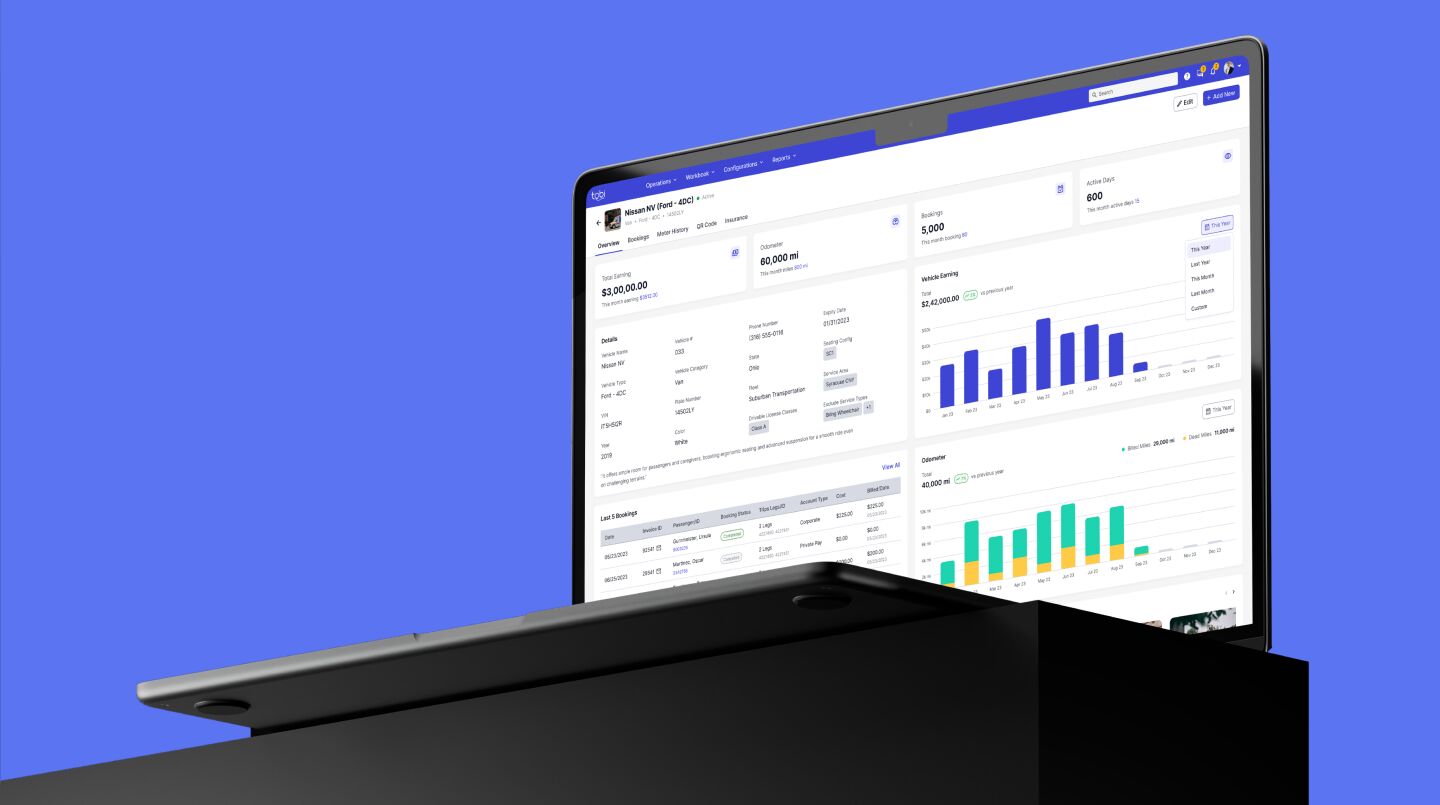
This project required in-depth domain expertise from both the healthcare and transportation sectors. We created a fully autonomous, comprehensive application using data science and real-time variables to optimize routes, automate scheduling, and offer instant dispatching.
The software integrates real-time traffic data to come up with optimal routes—avoiding traffic delays and creating a streamlined process. We also devised a system that allows passengers to share a ride assigned for a particular area, saving time and money for both the customer and the NEMT fleet operator.
Drivers are provided with an Android or iOS application that tracks the ride, allowing drivers to manage ongoing requests. With the application, fleets of any size are able to dispatch their trips automatically and communicate seamlessly with both drivers and riders.
We used Microservice architecture to make the application highly scalable. The mobile apps for drivers were designed and developed in the native environments of Android and iOS. MariaDB, a fork of the MySQL relational database management system, was used to manage fleet records, patient information, and vehicle records.
RabbitMQ was for quick signaling and messaging between drivers and the central server. On the backend, Web Sockets provides real-time, interactive communication between the client browser and the server. The solution is hosted at the data center of Taazaa.
As the system’s complexity grew, regression testing took longer and longer. The number of regression tests reached roughly 2,000, requiring nearly a week of manual effort and four testers to complete.
At this point, the Taazaa QA team implemented an automated testing solution. 1,600 of the 2,000 regression tests now run overnight each night, saving significant human hours.
In addition to reducing testing costs, the test automation allowed for greater test coverage and reduced the chance for human error and missed test cases. Human testers were freed up to focus on more complex test cases, resulting in an improvement in software quality.
Test automation accelerated the overall development cycle. Instead of struggling to close sprints, the team now does two to three releases each week.
All in all, automated testing allows Taazaa to save time, improve quality, and accelerate the development cycle, allowing Tobi to get new features to market faster.