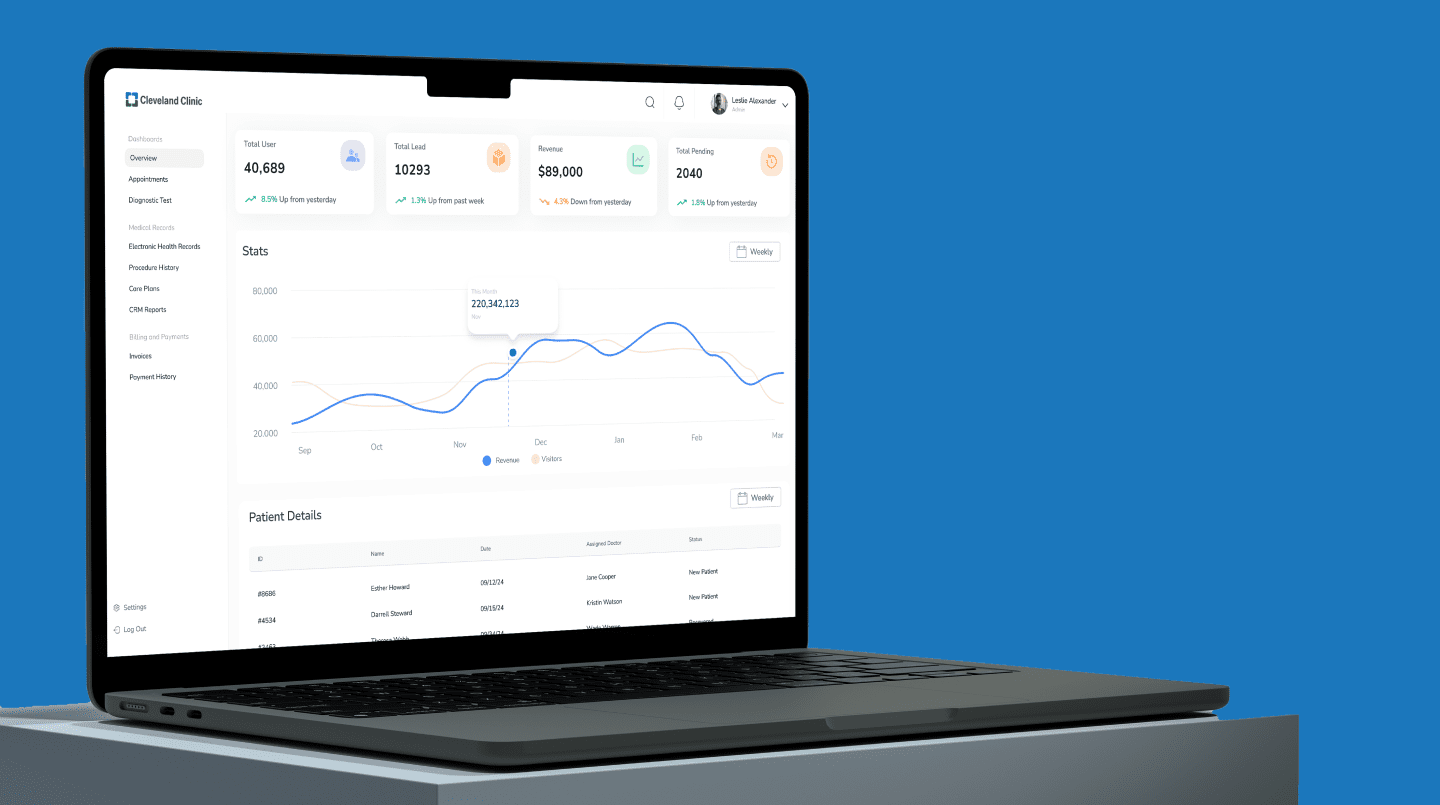
Cleveland Clinic Improves Medication Montoring with a Custom App

Key Takeaways

The Challenge

Slow. Inefficient. Error-prone. These three significant problems plague any manual, paper-based system for data collection.

Such was the case for the Cleveland Clinic, where pediatric psychologists used a manual, paper-based system to monitor ADHD medication progress in children and young adults.

Realizing they needed greater efficiency and accuracy, they sought to replace paper with a web-based custom healthcare platform.

The web app would be used by a mixed audience of parents, teachers, clinicians, and medical office administrators—all of whom had differing levels of technical proficiency. Therefore, it needed to be easy to use.

Realizing they didn’t have the in-house expertise to build the app themselves, the clinic hired a third-party software company. That company, in turn, tapped into Taazaa’s experience in healthcare applications to complete the project.


The Solution

The resulting application allows parents and teachers to report the daily progress and efficacy of a child’s new ADHD medication. In turn, clinicians use the app to monitor the child’s reaction to the new medication and then report those findings to the child’s doctor.

The custom application allows clinicians to track the following patient data:

  • Medication name
  • Generic medication name
  • Medication type
  • Number of days/weeks patient has been on the medication
  • Behavioral impact of medication (symptoms, efficacy, side effects)
  • Parental and teacher ratings of the patient on a 1-7 scale

Parents, teachers, and clinicians can also input freeform notes. The app emails a reminder to the parent if they do not input their daily report.

Not only is the app HIPAA compliant, but it also meets or exceeds accessibility standards and incorporates the clinic’s branding and color scheme.

With the bespoke application in place, the clinic no longer has to rely on paper forms that must be manually entered into the database. Clinicians, patients, and their parents now enjoy better doctor-patient communication.

The Results